Category overview

Transformer

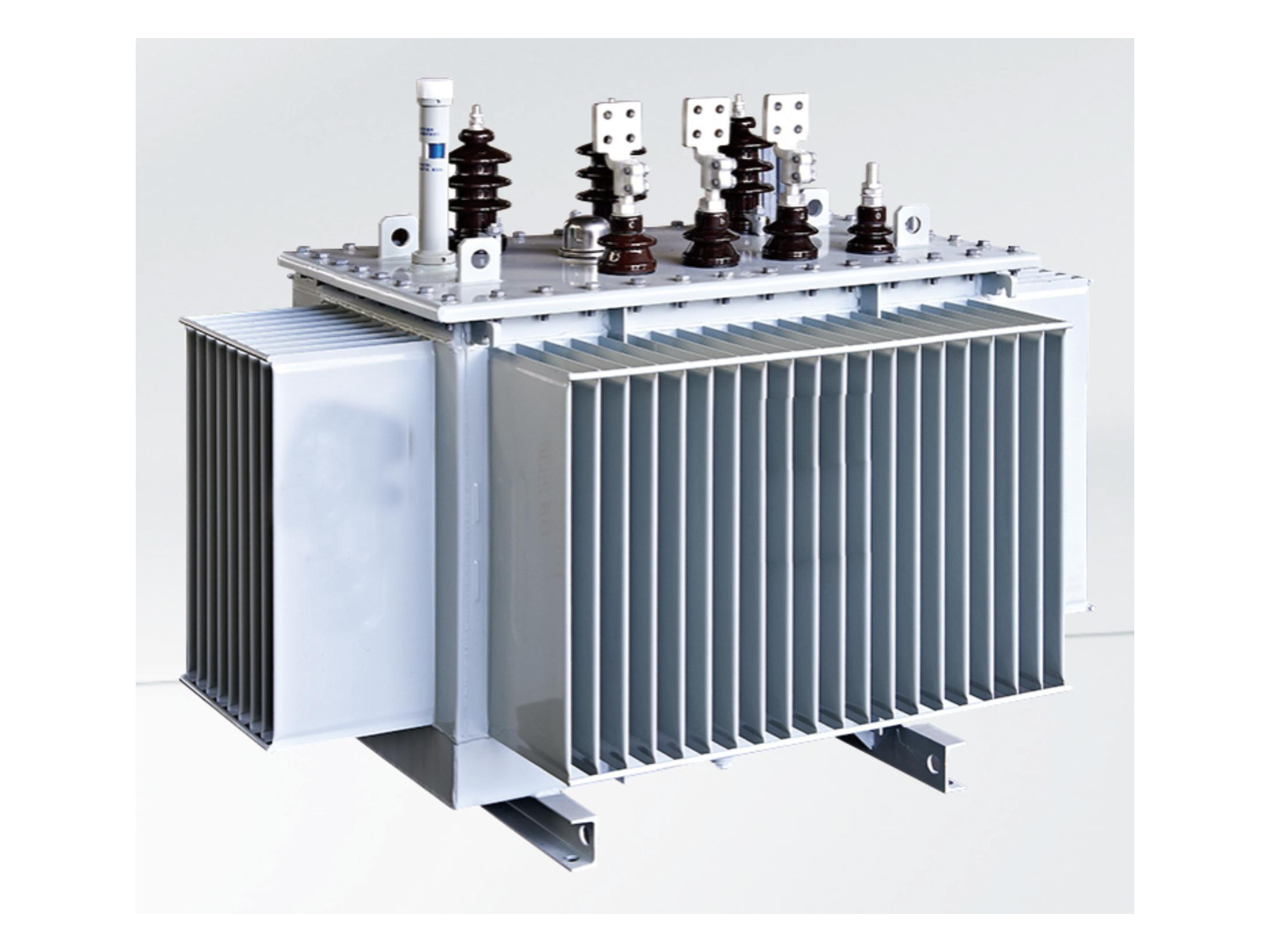
Power transformers change AC voltage to connect the incoming distribution supply with the required load voltage. The S11 oil-immersed range uses oil for insulation and heat transfer, with fully sealed S11-M configurations available. Capacity, winding voltages and site conditions should be assessed together for the intended load.

S11 oil-immersed power transformer with cooling fins and top-mounted bushings

1 product · Showing 1–1

S11 Oil-Immersed Power Transformer

Transformer

S11 Transformer

Oil-immersed power distribution transformers with a 0.4 kV low-voltage winding. The 10 kV-class S11-M range offers a fully sealed tank and capacity ratings from 30 to 2500 kVA.

View product

The essentials

What is a Transformer?

A transformer is a stationary electrical device that transfers energy between windings through a magnetic core. The winding ratio changes the AC voltage for the distribution system. In the S11 oil-immersed range, oil provides insulation and carries heat from the active parts to the tank; S11-M identifies the fully sealed tank configuration. This category currently lists oil-immersed equipment, rather than a separate dry-type range.

How it works

Working Principle of Transformer

  1. Create alternating magnetic flux

    When an AC supply is connected to the primary winding, an alternating magnetic flux develops in the iron core. The core forms the magnetic path linking the primary and secondary windings. This changing flux is the basis of energy transfer between the two winding circuits through electromagnetic induction.

  2. Induce the secondary voltage

    The alternating core flux links the secondary winding and induces an alternating voltage in it. In the ideal relationship, U1/U2 = N1/N2, so the winding turns ratio determines whether voltage increases or decreases. The induced secondary voltage retains the frequency of the connected AC supply.

  3. Transfer power to the load

    When a load is connected, the secondary winding supplies current while power is drawn through the primary circuit. A simplified ideal model neglects losses and expresses power balance as U1 × I1 = U2 × I2. Actual transformer operation includes losses, so this relationship is an explanatory approximation.

Project enquiries

Have a single-line diagram or equipment schedule?

Share the electrical ratings, circuit functions and installation conditions for a configuration review.

Send your requirements

Why this category

Our Transformer Advantages

  • Oil performs both electrical insulation and heat-transfer functions within the transformer.
  • The listed S11-M configuration uses a fully sealed corrugated tank.
  • Discrete capacity ratings from 30 to 2500 kVA support selection around the required distribution load.
  • Listed high-voltage winding options and a 0.4 kV low-voltage winding support a defined voltage-conversion requirement.

Before you specify

Frequently Asked Questions

Which transformer types are currently listed?

The available product is the S11 Oil-Immersed Power Transformer, including fully sealed S11-M configurations. The published technical range covers 10 kV-class equipment; a dry-type transformer range is not currently listed.

How should transformer capacity be selected?

Provide the load schedule, expected operating load, motor-starting requirements and any planned expansion. Review these with the required capacity and installation conditions rather than choosing a rating from connected load alone.

Which winding voltages need to be specified?

State both the incoming high-voltage value and required low-voltage value. The published range lists several high-voltage winding options and a 0.4 kV low-voltage winding; confirm the complete configuration with the selected capacity.

Does a fully sealed tank mean no maintenance is required?

No. Fully sealed describes the tank construction. Inspection, operating checks and maintenance requirements still follow the supplied equipment documentation and the actual site conditions.

Can energy savings or loss values be confirmed before ordering?

Request the specified loss values and relevant test documentation for the selected rating and configuration. A percentage saving needs a defined comparison and operating basis; it should not be inferred from the S11 name alone.

Project enquiries

Select the right equipment for your project.

Share your specifications, drawings and installation conditions. We can review the appropriate product and configuration.

Send your requirements
KNOWLEDGE & RESOURCES

Latest Blog Articles

Explore practical information for your next equipment enquiry.

PROJECT ENQUIRY

Discuss your requirements.

Shengyu — Global enquiry dialog (#4)
PROJECT BRIEF

Your enquiry details

This brief has not been sent. You can copy it for your project discussion.